Comfort, conformity, and the illusion of safety
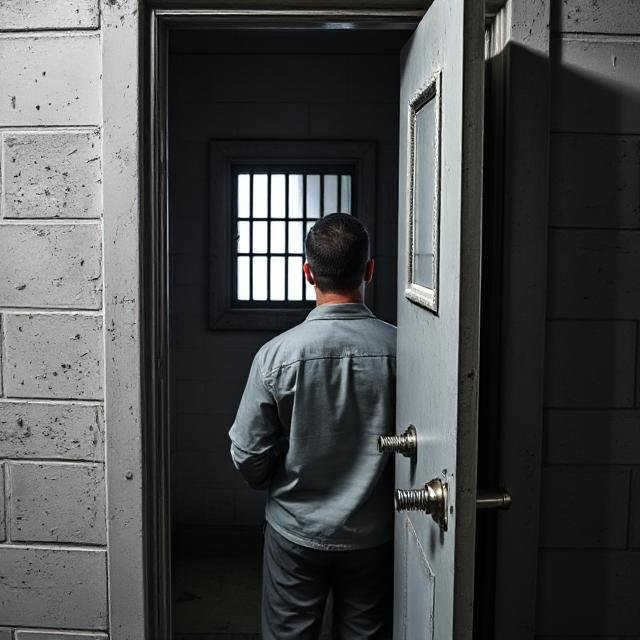
Most men are not free. They might appear successful, stable, even powerful but internally, many are trapped inside a prison they don’t even realize exists. It isn’t made of bars or concrete. It’s made of expectations. Unspoken rules. The lifelong conditioning that tells men they must be strong, silent, and unshakable to be worthy. I know this prison well. I spent years living in it.
In my twenties, I did everything I was supposed to do. I pursued a “respectable” career. I learned how to talk the part, dress the part, keep things together. I built an identity around being competent, dependable, and emotionally self-contained. I was praised for it by family, by bosses, by the world around me. On the outside, I looked like a man who had it all figured out. But on the inside, I was quietly breaking. It wasn’t dramatic. It wasn’t a breakdown in the middle of the street. It was more like a slow erosion. I felt disconnected from others, from myself, from any real sense of aliveness. I didn’t know how to talk about it, or even if I was allowed to. The stories I’d absorbed about masculinity didn’t leave room for uncertainty or vulnerability.
So I did what many men do: I stayed quiet. I kept producing, performing, providing. I numbed discomfort with distraction work, achievement, entertainment. I wore the mask of “fine” so well I sometimes fooled myself. And yet, something inside me knew: this wasn’t living. It was surviving. Quietly. Safely. And ultimately, alone. This is the psychological prison I’m talking about. The one where men are told that their value comes from their utility. That their worth depends on their ability to suppress emotion, endure silently, and avoid anything that looks like weakness. The one where comfort and control are sold as freedom, but actually become cages.
The bars of this prison are reinforced with shame. Many men carry a deep, unspoken fear of being exposed not as frauds, but as human. And since the culture doesn’t give them many safe spaces to be raw, they armor up. They conform. They settle into predictable routines that feel secure, even if they cost them their vitality. The illusion of safety is powerful. A steady paycheck, a quiet house, a calendar full of responsibilities these things can look like success. But when they come at the cost of emotional honesty and inner freedom, they become traps.
So what breaks the cycle? For me, it was uncomfortable. Disillusionment. A growing sense that I was missing the point of my own life. I couldn’t name it at first, but I knew I was tired, tired of pretending, tired of posturing, tired of feeling numb. The real shift came when I started telling the truth. Not all at once, and not to everyone. But I began small: admitting when I didn’t know. Asking for help. Saying no. Letting go of the need to be the one who always has it together.
It felt terrifying at first like stepping outside the only version of manhood I’d ever known. But in that space of uncertainty, I found something I didn’t expect: relief. Then clarity. Then connection. I began to realize that real masculinity isn’t about performance. It’s about presence. It’s about being rooted in truth, even when it’s uncomfortable. It’s about choosing courage over control, integrity over image, and depth over dominance.
And freedom? Real freedom doesn’t come from mastering the external world. It comes from liberating yourself internally from outdated scripts, inherited shame, and the constant need to prove something.
Today, I still feel fear. I still wrestle with old conditioning. But I no longer let it dictate my choices. I’ve stepped out of the prison not because I’m perfect or fearless, but because I got tired of living a life that looked good but didn’t feel real. There’s a quiet revolution happening. More men are starting to ask the deeper questions. They’re unlearning. Rebuilding. Coming home to themselves. And maybe that’s the beginning of true masculinity not control, but authenticity. Not comfort, but courage. Not being the strongest in the room, but being strong enough to take the mask off.